170
CE, the villa at its height
Mini-museum · Orbe
Nine Roman mosaics, still in place, under five contemporary pavilions.
Boscéaz
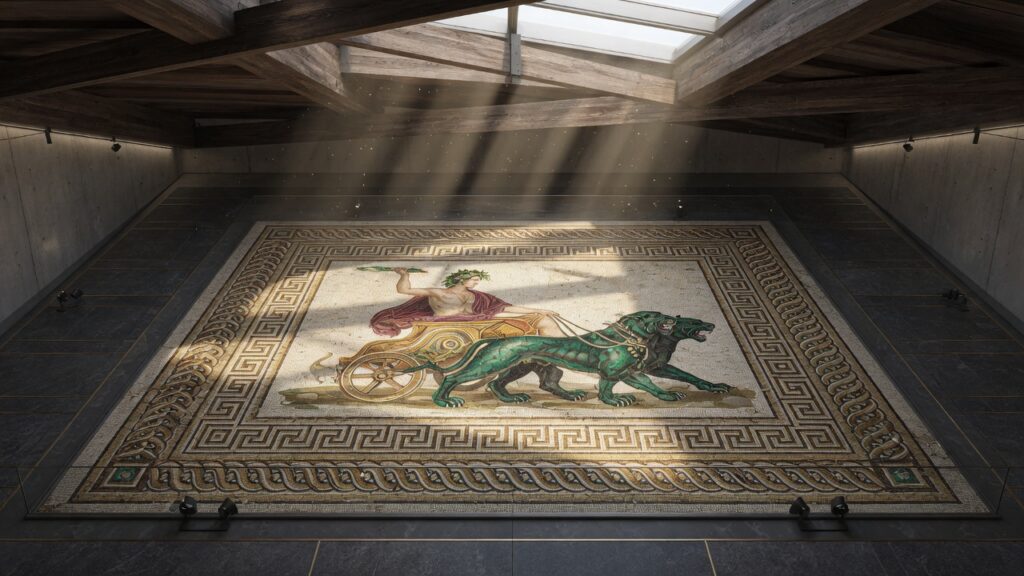
Here the ground still speaks. The tesserae never left the villa: you cross them as you would a room, two centuries after Christ.
A palatial villa, a sixteen-hectare estate, some of the finest pavements in the Empire.
170
CE, the villa at its height
9
mosaics preserved
16 ha
of rural estate
200 m
of residential façade
Urba
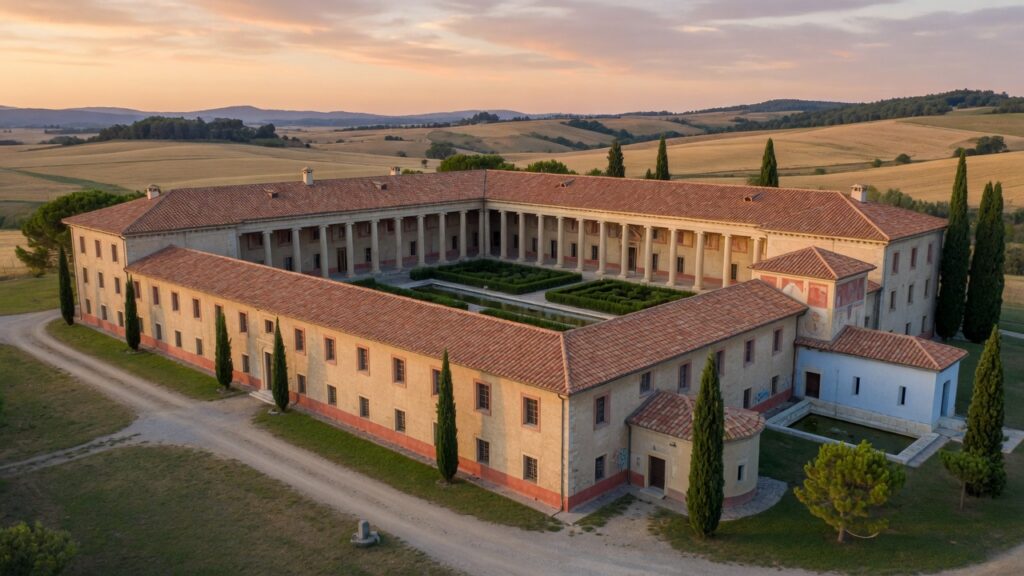
Around 160–180, a vast villa rustica rose at Boscéaz, two kilometres from Orbe. Pleasure courts, private baths, a Mithraeum, and rooms paved like a palace.
Destroyed in the Alamannic invasions, the estate became a medieval quarry. The mosaics stayed. They were rediscovered from 1841.
Today five pavilions protect them in situ. They were not taken to a museum: the museum was built around them.
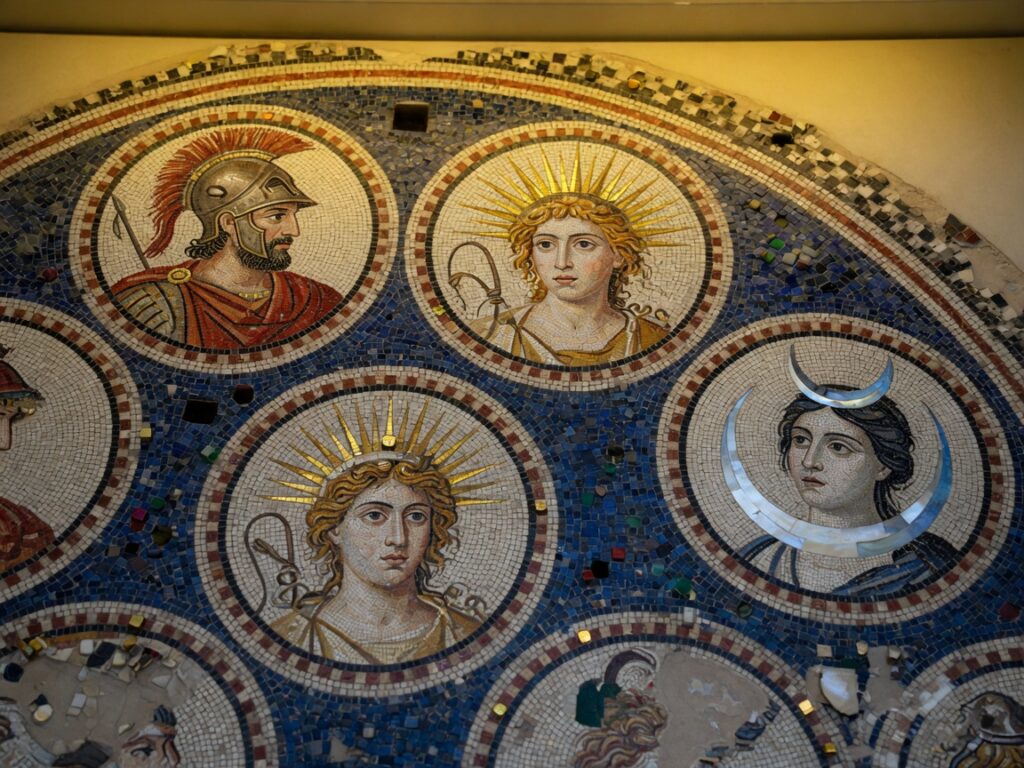
The pavements
Pavilion IV
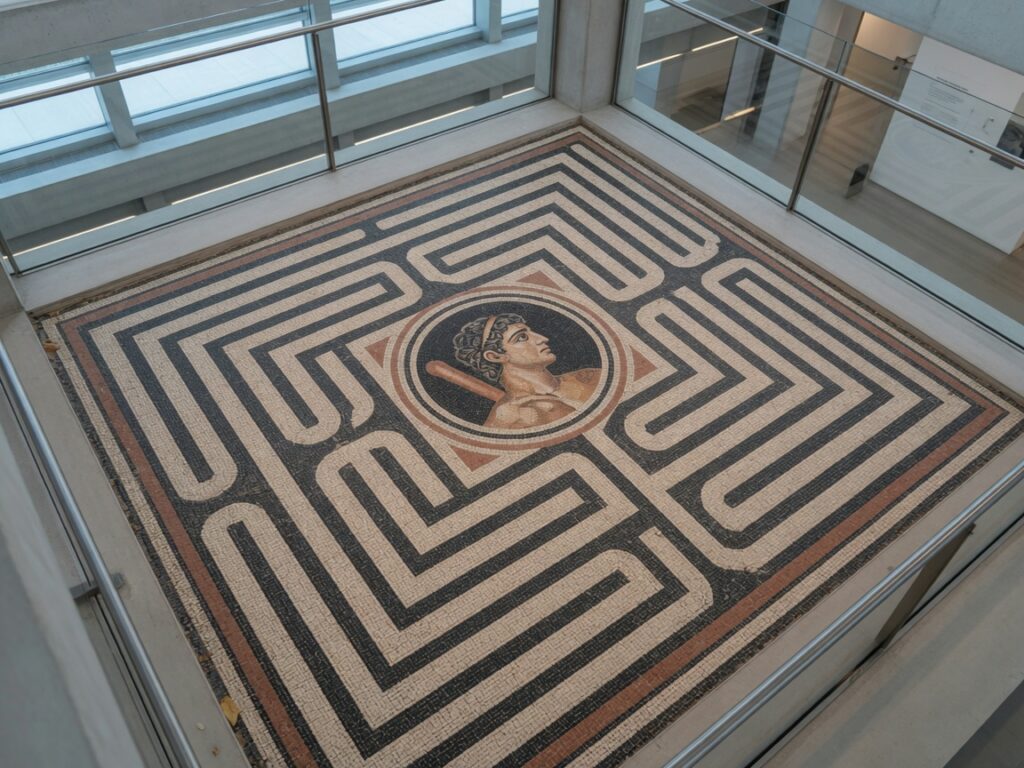
Pavilion II
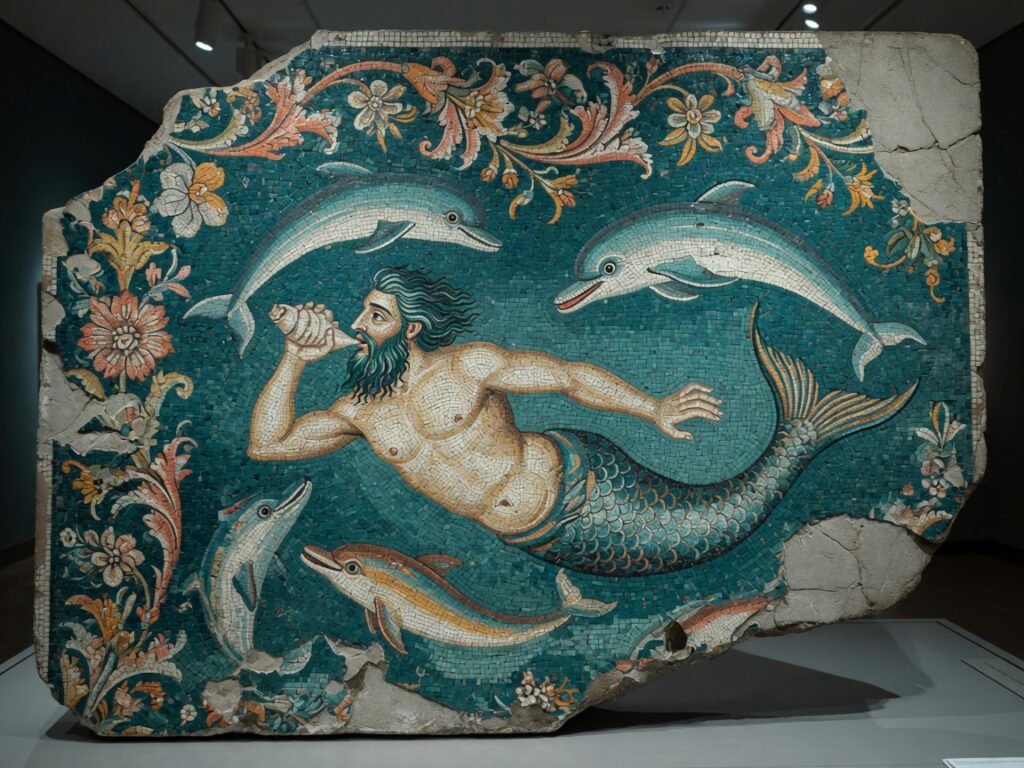
Pavilion II
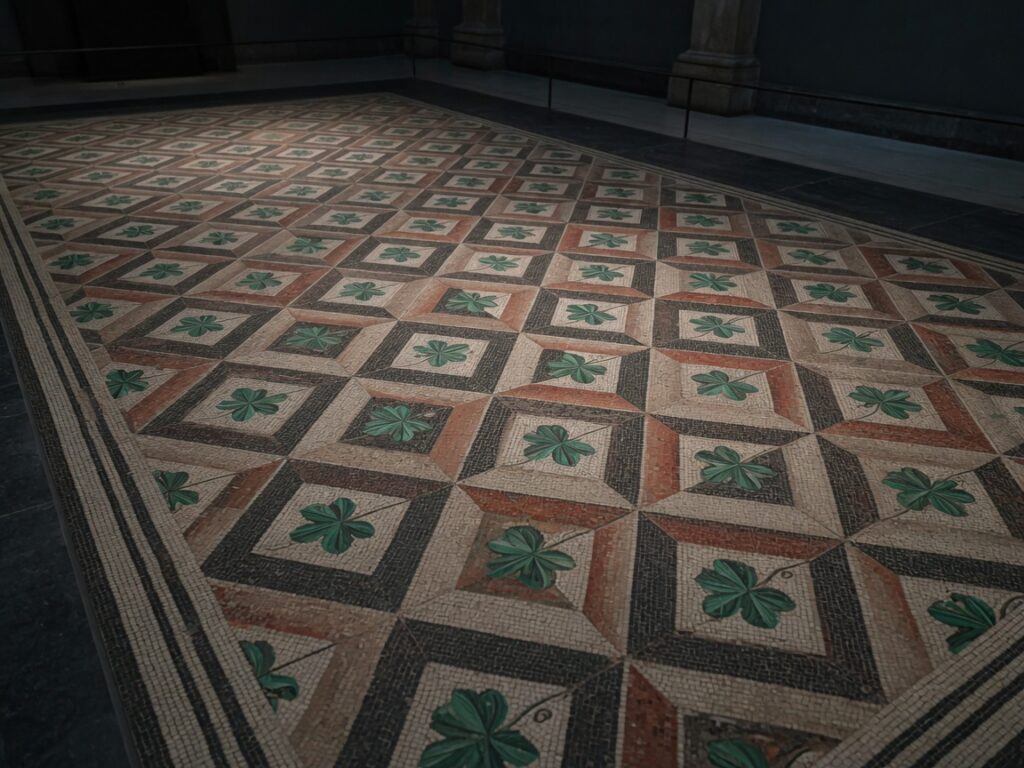
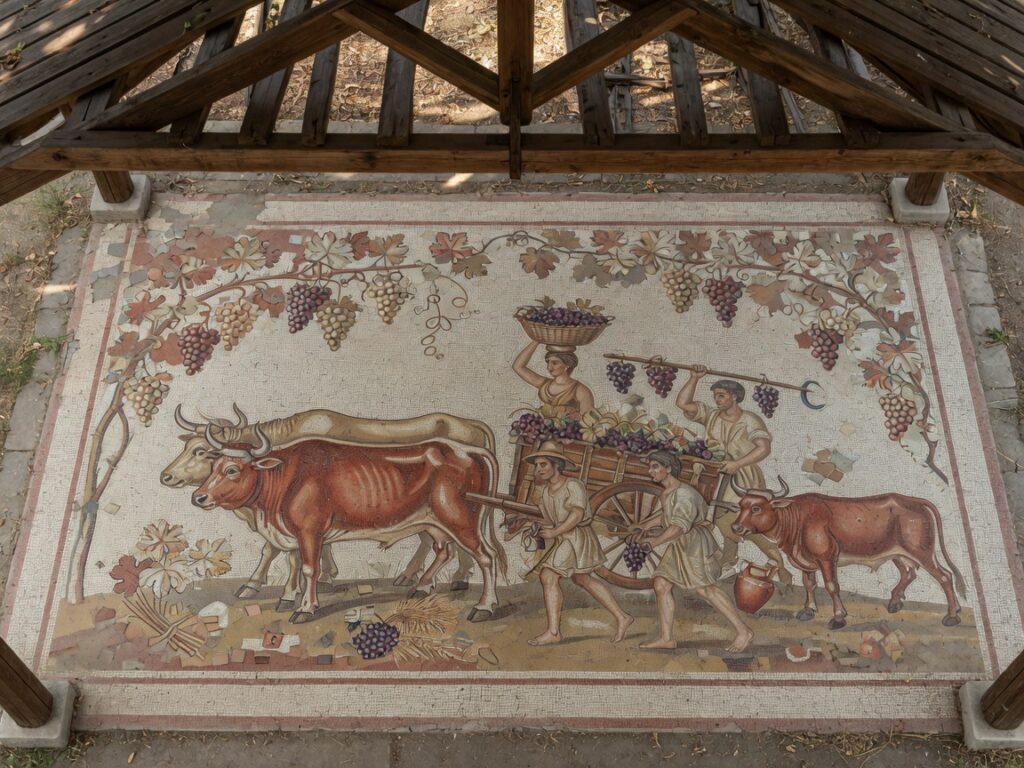
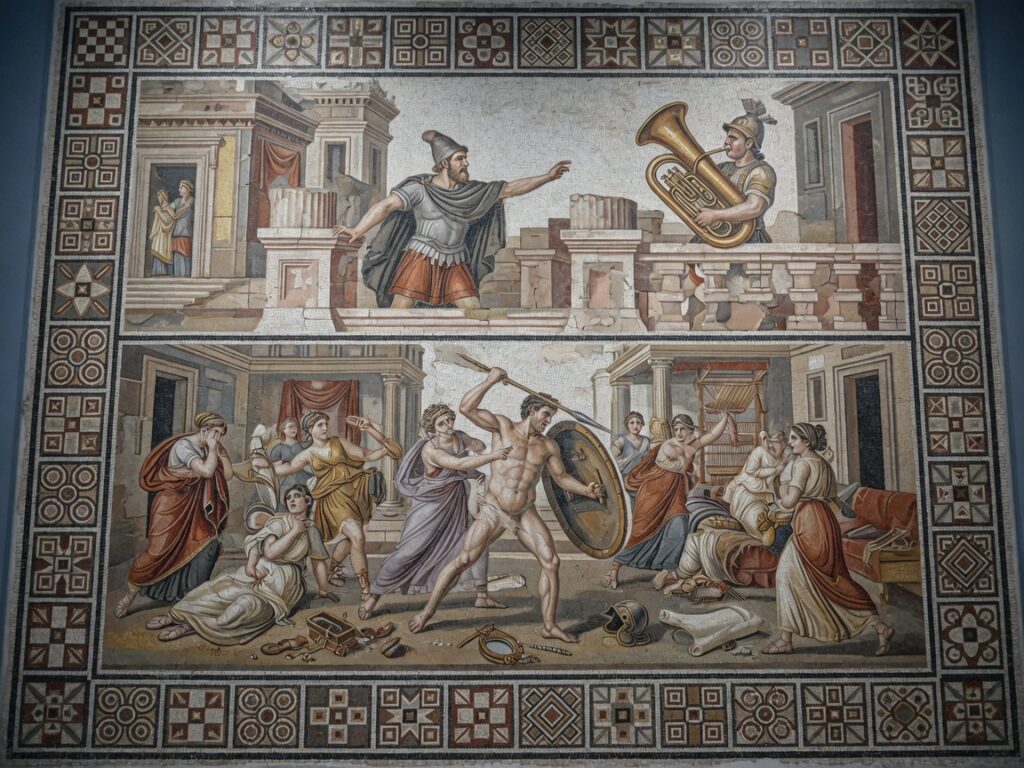
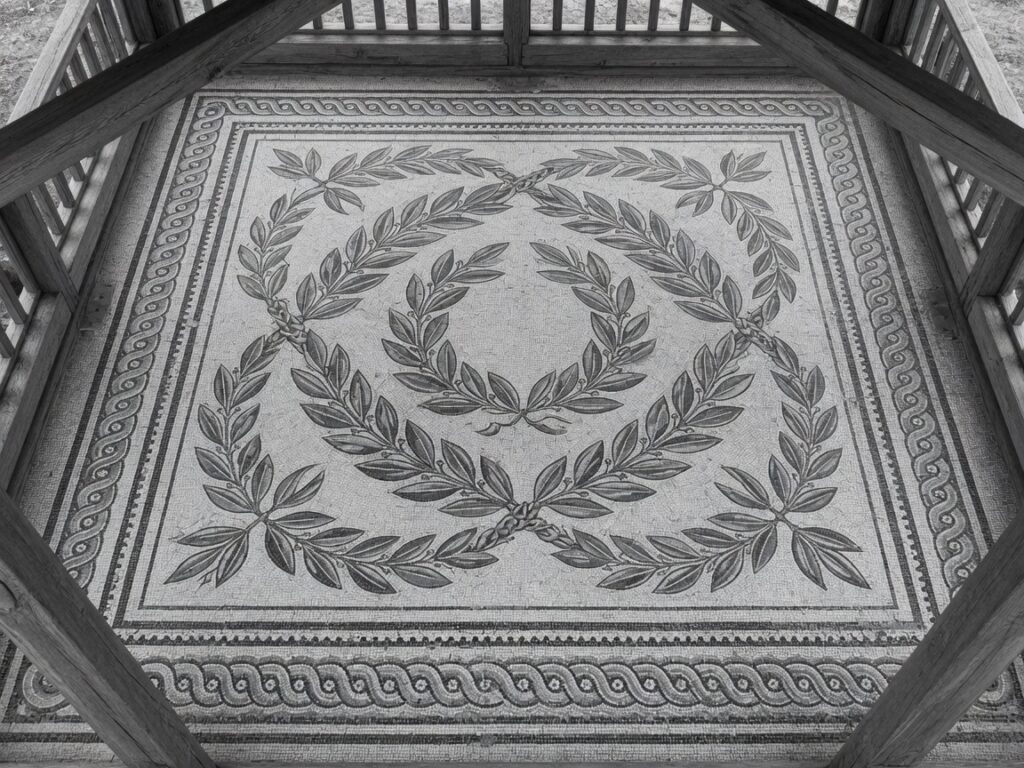
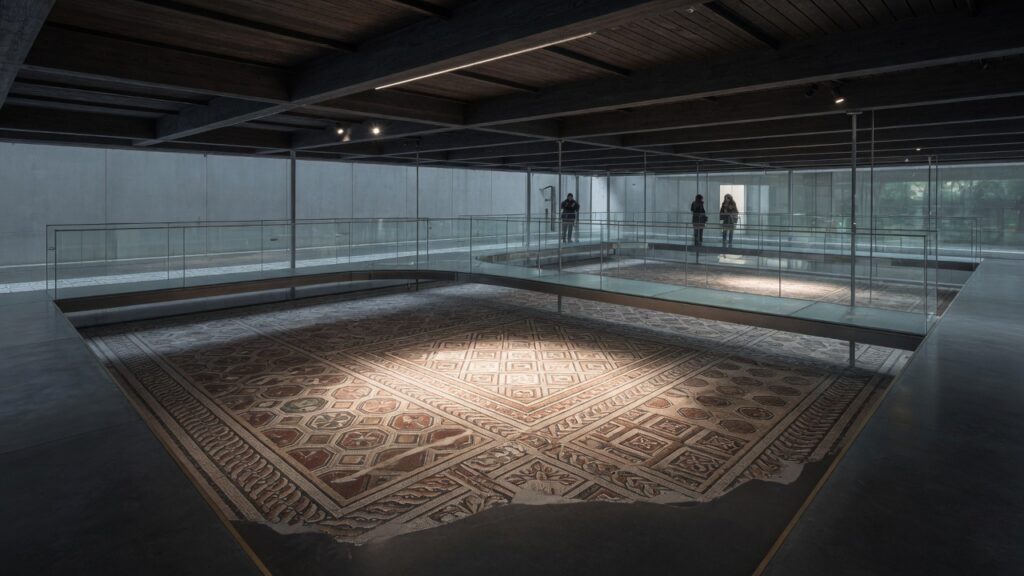
Five pavilions, a model, museum silence. Allow two hours. The mosaics are not waiting: they are already there.